Give Evil The Central Stage – Groundbreaking Villain Moments

Demonic male with burning beard and arms.

I’m back with the concept of the villain because he/she is crucial to your story. As far as I can remember, I wanted to write a brutal villain who will stop at nothing. And I remember movies by their villainous character actors.

The definition of the villain is:

“In their role as an adversary, the villain serves as an obstacle the hero must struggle to overcome. In their role as a foil, the villain exemplifies characteristics that are diametrically opposed to those of the hero, creating a contrast distinguishing heroic traits from villainous ones.”

Source: https://en.wikipedia.org/wiki/Villain

The definition reminds writers of the importance of struggle but contains various traps which can cast your evil one with one of the extras. The antagonist is a series of obstacles on the hero’s journey, but also an entity of his own. He has to be of the same caliber as your protagonist- preferably stronger. You wouldn’t confront Batman with a minor criminal in the final battle, would you? The Joker, played by Jack Nicholson or Heath Ledger, is an unstoppable force of nature.

The villain is a central character of your book and you must treat him with respect.

He/she demands a lot of work. I advise you to sit down opposite your villain after you’ve Googled a character questionnaire form. An example of a set of character questions: https://www.novel-software.com/theultimatecharacterquestionnaire

Remember, he’ll fool you- like any respectable villain would deceive a cop during the initial interrogation. Each layer of deceit leads you closer to what makes him tick. That’s the point of the character interview. You might never tell the reader what he does first thing in the morning- unless that signifies something important- but you can resource the library of him when you write the groundbreaking villain moments I’ll discuss next.

If you know the depths of the villain, you know instinctively what his reactions are.

Groundbreaking Villain Moments

Whether you outline your story or start tapping away in the presence of your divine muse, remember to create major plot points for the villain. These key scenes can make the character relatable, or scare the shit out of your readers if that’s what you’re aiming for.

My list of villainous scenes isn’t complete. I’ve chosen the important few, with movie clip examples.

The First Look

The first impression of the antagonist defines the image of the hero’s counterforce. How do you introduce the villain? Hopefully not by describing his hair and eye color, and his dashing good looks which make the ground shake beneath your feet. Don’t get me wrong- I daydream of good-looking villains, but you must start with:

  • his first crime
  • the first harsh word
  • the evil glance
  • he camouflaged as the slightly creepy everyman
  • someone you’d never suspect but happens to be on the scene
  • And so on. The sky is the limit with villain introductions.

When I was seven, a known bully- a big one- waited for me on my way home from school. Trying to outrun him was futile, and he knew where I lived. He caught me and suffocated me with snow. This happened each winter afternoon until I learned the subtle art of evasion.

Meeting your villain is like the childhood moment when an overpowering person grabs your arm and you understand that he’s not letting go.

Think of ways to make the reader afraid of him- or what he can cause- and you’re on the right road. We’re talking about power and violence. You might go the sly route: let him appear harmless, and the fear doubles with shock as he strikes. The ill omen of doubt must be present from the beginning. Building a believable personification of evil is hard work.

The First Confrontation

“The moment when your villain and hero meet face-to-face is a wonderful opportunity to show us why your villain will be a good foil for your hero. These confrontations are at their best when the villain reveals a chink in your hero’s armor.”

Source: https://thewritepractice.com/villain-scenes/

An example from the movie Matrix, Agent Smith (Hugo Weaving) interrogates Keanu Reeves: https://www.youtube.com/watch?v=4D7cPH7DHgA

At the end of the scene, we understand that something is seriously wrong with the movie’s world.

The Hero’s Temporary Defeat

You’ll recognize the hero’s failure from every Hollywood movie you love. You can combine this scene with The Villain Shows His Cards, or The Monologue– the spot in the James Bond movie where Ernst Stavro Blofeld describes his complete plan to rule the world.

The Hero’s Temporary defeat deals with stakes. You’ve given us the stakes at the beginning of your hero’s journey (inciting incident) and when you introduced the villain. Now is the time to provide us with a bitter taste of defeat. The temporary failure means a foretaste of death.

What would a bad guy do if your loved one was at his mercy and you were unable to stop him?

Let J. T. Walsh tell you while the hero (Kurt Russell) is rendered powerless. A magnificent scene from the movie Breakdown: https://www.youtube.com/watch?v=2NAszvB80Ws

The occasional movie-goer knows instinctively that the hero will get help, or he has an ace up his sleeve, or the villain is so mesmerized by his plan that he doesn’t see the sidekick creeping up on him… whatever you choose as the vessel of turning the tables, and moving towards the resolution. Temporary defeat is at its best when the reader believes that the hero cannot recover from the blow.

It’s your villain’s grand moment. Let him show off his hideousness. In movies, this trope takes a hell of an actor to twist the scene into something previously unseen.

The Origin Story

The Origin Story is the villain’s chance to explain himself. Let his humanity shine through, and the reader can relate to him. Take Marvel character Loki: “sibling rivalry and daddy issues explain his actions. Being always in Thor’s shadow isn’t good for Loki’s overall mental health, and finding out that he’s adopted doesn’t help.”

Source: https://io9.gizmodo.com/10-villain-origins-that-actually-make-sense-1742183593

Most of us don’t work for the Devil. Reasons like: “the end sanctify the means” and “history demands action” and “I obeyed orders” have paved the way to hell on many occasion. The explanations don’t make the crime justifiable but offer a view on human logic.

Remember that explaining the Devil can take the scare away. If your evil one is a psychopath, don’t bother with the origin story.

Sometimes the human mind attempts to see something which isn’t there. The search for Ted Bundy’s soul is futile. Javier Bardem offers one of the most accurate movie depictions of psychopathy as the stone-cold hitman Anton Chigurh in No Country for Old Men. He needs no origin story. He is what he is.

The hotel scene between Woody Harrelson and Javier Bardem is pure brilliance:

Enjoy!

Know Thy Enemy- The Making of a Great Villain

Detective interviewing suspect in dark private room

So, you have a theme in mind: justice, revenge, friendship- a theme can be anything. But a great idea has to be universal- it must play the heartstrings of your readers. It knots into the expectations of your audience. The central psychology of stories varies somewhat by the era. If you want your book to surface among the classics, you must have the longevity of a timeless theme. You have to touch upon the common sub-consciousness: story and character archetypes which have been passed on in literature, movies, and music.

What does your villain symbolize? What does he/she stand for? This is important.

Evil Dressed Up

Christianity has embedded the notions of good and evil into western writing. Great monotheistic religions have similar theories of hell and the devil. The antagonist, if he is a real villain in the classical sense, embodies the ancient idea of the dark one.

22_top25greatestvillains
Ralph Fiennes as Amon Goeth in Schindler’s List

We love evil characters. I know I do. Some of the actors I admire have played iconic embodiments of darkness: like Ralph Fiennes as Amon Goeth in Schindler’s list. What could be eviler than a man who shoots a small boy in the back, or tortures a defenseless woman daily?

The antagonist is a vessel for your book’s theme. He dresses up the devil. He is the opposite of your hero’s goal. But remember that evil must be proved through constant actions of vileness. If you litter the pages of your villain with murder and mutilation, one good deed gets more attention.

You want your readers to understand your antagonist, don’t you?

If he/she doesn’t have a tiny speck of goodness, how could people relate to his story? The nightmare embodied has to be understandable. Some of the best monsters show mercy or love to the heroine/hero: like Anthony Hopkins as Hannibal Lecter protecting the main character, Clarice Starling in The Silence of the Lambs.

Ways to show a bit of good inside bad

  • He/she doesn’t understand what he/she is doing
  • The villain thinks that he is right, that he has the proper moral grounds
  • Ends sanctify the means: world-domination is required to set history straight
  • He suffered from violence and abuse as a child
  • He is a psychopath- and this is really hard to relate to but makes him interesting if you do your research
  • He understands the meaning of his actions in the end
  • Love redeems him. I don’t believe in this one because we each love in our way. Evil loves with murder and violence loves with a punch in the eye. If you have serious writing skills, you can make this one float though.
  • He loves animals or his children. He can’t be totally evil, can he?

Of course, if your villain is simply seething with malevolence, you can kill him in the end. Justice is redeemed and you stand your moral ground.

In real life, the most ruthless violent bastard usually wins. I’m sorry.

Remember that some of the cruelest monsters in world history have believed in their own ideology. Whatever you can conjure from the depths of hell, can never compare to the good intentions which have paved the road to the real-life inferno of genocide.

description

A good villain can be a pain in the ass for your protagonist. But does he talk to you? If you’re like me, he/she bothers you when you should fall asleep or drive a car, or take the kids to daycare.

How is his/her voice? Raspy? Seducing? Deep? Beware of cliches. How about whiny, wiry, oppressing?

Describing hands or voice or movement is more fertile than the usual color of eyes and hair. What are his mannerisms and bad habits? How does he move? What does he do for a living? And the job is essential. It’s the first question which we ask when we make acquaintance.

If you want to twist the usual clichés, give him a job which conflicts with his evil.

Stalin
Josif Stalin

Thinking about actors who could play your villain helps to visualize your monster. You can find animated gifs about almost every actor from the roles they’ve played. I use the gifs to describe different facial expressions and movements.

If your style is film noir, look up 40’s faces. If your princess of horror roams the distant future, try sci-fi movie actresses.

Searching the web with words like “greatest movie villains” will most likely offer you a library of wickedness which you can build from.

Each depiction is famous for a reason.

If you’re a history buff like me, you will find a catalog of despicable people on the pages of history books. I like to have a real-life equivalent for my villains.

Character Questionnaire

Letting the antagonist answer your questions during a character interview is a great way to get to know your villain.

The net is full of questionnaire forms, like https://www.novel-software.com/theultimatecharacterquestionnaire

Character mannerism lists: https://www.wattpad.com/84533439-a-list-of-500-character-quirks-and-traits-list-1

To avoid information indigestion, make your own list, which suits the novel you are writing at the moment.

And finally, check out your favorite books. Read the epic pages which:

  • introduce the villain and describe him
  • what happens to him in the end?
  • How does the writer show some admirable traits among the constant darkness of evil?
  • What’s his relationship with the hero/heroine?
  • What are his mannerisms, his bad habits, his job, his hobbies, etc.? President Snow tended to roses in his garden in The Hunger Games. And his role was played by one of the greatest character actors: Donald Sutherland.
  • What does he stand for?
  • How do you identify with the antagonist? Can you understand his motives? Why?

I keep a writer’s journal on my favorite villains. I have page after page of classic villainy from the authors I respect. There’s no way- ever- my villain can topple O’Brien in George Orwell’s 1984.

Other Tips

The Warrior Mindset – How to Write Compelling Action

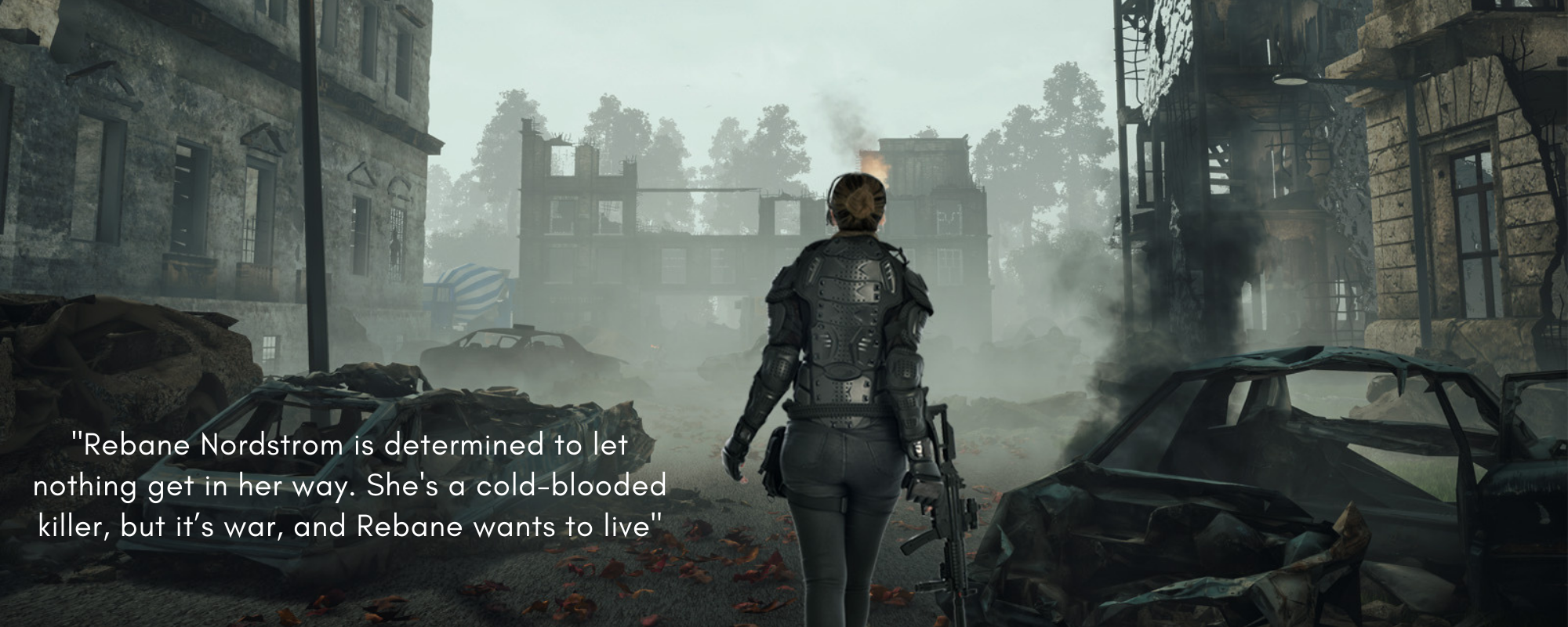
Futuristic warrior

Have you ever fired a gun? Oh, you have- good for you. If you haven’t, find a shooting range near you or ask the local hunting club to let you tag along. Just smelling gunpowder and hearing the blast noises (through quality headphones that protect your hearing) will give you a sense of the real thing. The rest is up to your imagination…

If you are writing about military action like me, you face a tougher challenge to get the facts right. The army uses unique terminology, and the warriors have a certain mindset forged through endless drills and hard work. The NATO and European armies have slightly different rank systems.

Add in The Russian Federation, and you’re officially in the same grievous trap where I found myself when writing The Unholy Warrior. I decided to take things methodologically: I researched until my butt hurt from sitting and my fingers were raw from tapping on my keyboard.

Join a writer’s site like The Write Practice where you publish one piece a week and get critique from other writers in exchange for you doing the same for them:  www.thewritepractice.com

You can also ask some of your beta-readers to point out flaws and factual errors. There’s always someone who knows specific things because he has a military background or just because he is interested in such stuff.

facts- Get Them Right

You can also keep a memo on things which bother you and tackle the mistakes one by one. That way you can continue writing but know your weak spots need tending to.

When you’re wicked famous like John LeCarre, you can create your own terms and expect the spy professionals to start using them. LeCarre devised terms like “babysitters” and “lamplighters” to describe different guilds of the spy profession.

Gun Caliber

Writing about guns and ammo is so much easier if you have some first-hand experience. Organizations such as the NRA and various hunting magazines offer advice on shooting positions, the common aiming errors and using the best ammo to kill big game. They have some excellent info graphs online.

On shooting positions, visit: https://tpwd.texas.gov/education/hunter-education/online-course/shooting-skills/rifle-positions

Do you know what a large- caliber rifle recoil feels like? If not, chances are that a relative of yours is a passionate hunter. Go along. You might be a pest to begin with, but the odds are that he loves to ramble about duck or moose hunting forever. You’ll learn something as you sit by the campfire and drink soot pan coffee. If you’re lucky, he’ll let you shoot under his supervision. I fired my first load of shotgun pellets towards a pinetree when I was fourteen years old.

The lighter caliber .22 is the best one to start target practice with. .22 LR is found in pistol and rifle ammo.

Read about different caliber ammo and what they are used for. The numbering isn’t linear or very informative. A bigger number doesn’t automatically mean a bigger bullet! Using the wrong caliber will jam the weapon and you risk serious injury or death. In addition to numbering, the ammunition manufacturer uses a short code. For example .Win means Winchester. Your rifle carries a carved text to signify the type of correct ammunition. Perhaps “win .308” like my Tikka T1 Tactical from Sako, a Finnish company which belongs to the Beretta conglomerate.

Hunting

Three-hundred thousand people are registered hunters in Finland, and ours is a small population with six million citizens. The government demands that each hunter undergoes a series of lectures and passes the final examination before gaining a hunting license. Gun laws are strict in the European Union and especially in Finland. Yet, commercial shooting ranges offer you a chance to shoot pistols and revolvers in the heart of Helsinki, our capital. In the countryside, almost every considerable village has a shooting range nearby for rifle training. People do hunt and are passionate about it.

Hunting

“Recoil (often called knockback, kickback or merely kick) is the backward movement of a gun when it is discharged. In technical terms, the recoil momentum acquired by the gun exactly balances the forward momentum of the projectile and exhaust gases (ejecta), according to Newton’s third law, known as conservation of momentum. In hand-held small arms, the recoil momentum is transferred to the ground through the body of the shooter; while in heavier guns such as mounted machine guns or cannons, recoil momentum is transferred to the ground through the mount.”

Source: Wikipedia.

Basically, the energy of ignited gunpowder has to go somewhere. It propels the bullet out of the barrel but an equal amount of energy kicks back towards the shooter. A heavy rifle absorbs some of the energy just lessening the force which hits the shooter. That’s why sniper rifles are usually bulky. They need to be accurate. Hunting rifles, which you drag around in the forest all day through the f***ng foliage and bush, are light and thus kick you harder during firing.

In Hollywood movies, we see a pistol bullet traveling far and hitting the opponent. In real life, it’s almost impossible to hit a moving target which is running zig-zag hundred-and-sixty feet away from you. Movie heroines hardly ever flinch at explosions. In real life, the sound of a .9 causes ear-splitting pain. Not flinching (as in shutting one’s eyes tight and grimacing not so sexy-looking) takes some heavy-duty training, not to mention a possible hearing loss.

As a writer, you can decide how much reality you want to embed. If you write fantasy, just come up with impossible things. Your readers will love them. If you’re writing a spy thriller which happens in the 21st century, do some serious research.

Close Combat

Have you received a blow to the head delivered by a powerful opponent?

You don’t have to tackle a man, or a woman, with a black belt. You can gain a lot of information by taking some newbie-sissy-level classes in self-defense arts like Defendo, Karate of Krav Maga. Ask your instructor to teach you what happens if you drop your defenses. One (gentle) blow to the head, and you’ll never forget that lesson.

It amazes me how short real-life fights are. Just a few seconds and a severe injury with long-time consequences has been inflicted. The winner and looser are found out in a blink of an eye.

Writing near combat scenes usually demands some bending of reality. We writers cannot disappoint our readers by a few lines, and that’s that. No, we must write different phases, evasion moves, near escapes and grabbing makeshift things like rocks to be used as weapons.

Attending writer’s festivals and happenings can link you with your thriller writer idols:

http://thrillerfest.com/

You can always learn from the best!

Other tips: